Finding the right mid-century home in Sunnybrae can feel exciting and a little tricky at the same time. You may love the clean lines, walls of glass, and indoor-outdoor feel, but you also want to know what you are really buying in a fast-moving San Mateo market. This guide will help you understand how Sunnybrae homes are priced, what mid-century features to look for, and which inspection and permit details matter most before you make an offer. Let’s dive in.
Why Sunnybrae Stands Out
Sunnybrae is a defined San Mateo neighborhood with boundaries recognized by the City of San Mateo. The area generally runs from the south side of 9th Avenue to East 16th Avenue, including Afton Court and Haddon Drive, and from South Amphlett Boulevard to South Railroad Avenue. For buyers, that matters because it gives you a clear framework when comparing listings, sales, and neighborhood conditions.
Sunnybrae is also a competitive pocket of San Mateo. Zillow’s Sunnybrae home value index was $1,644,234 as of April 30, 2026, up 2.0% year over year. Redfin reported a median sale price of $1,974,266 over the three months ending in April 2026, with homes averaging 12 days on market and selling about 10% above list price.
Compared with the broader San Mateo market, Sunnybrae tends to trade at a premium. Redfin’s citywide San Mateo median sale price was $1,602,173 with a 13-day median time on market. In practical terms, that means you should expect competition, but you should also stay disciplined about condition, layout, and long-term upkeep.
What Makes a Home Mid-Century
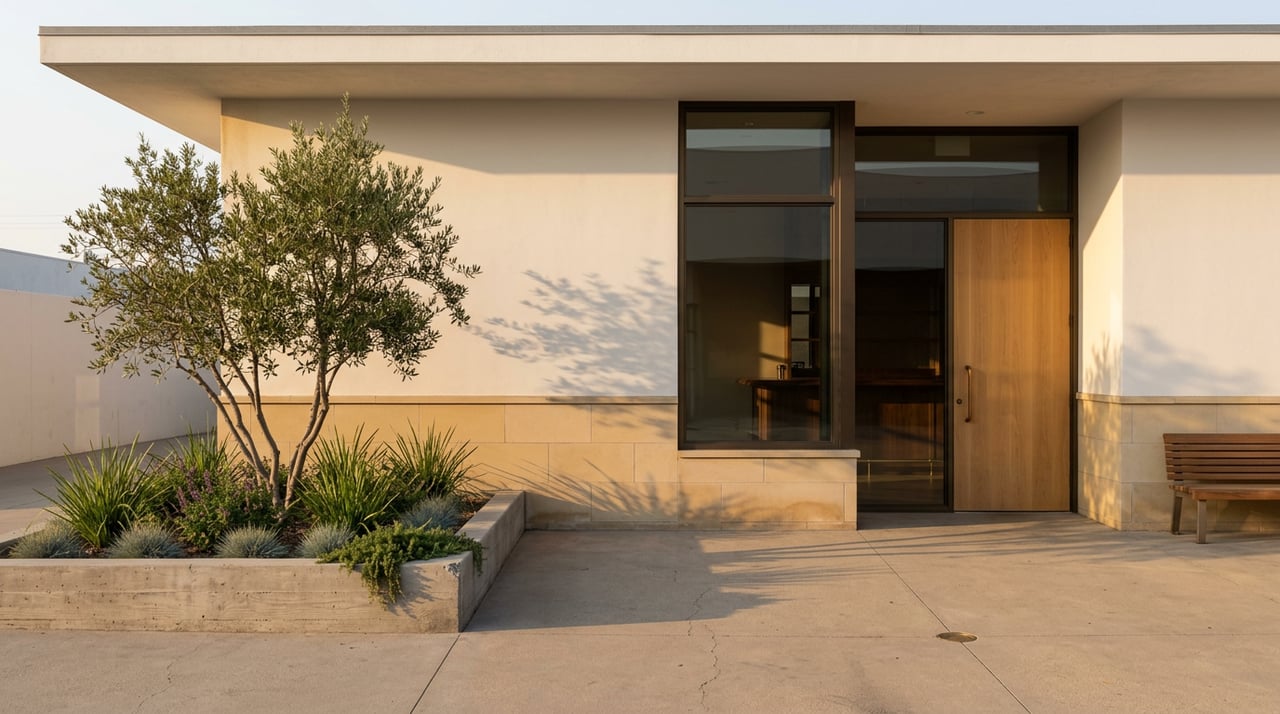
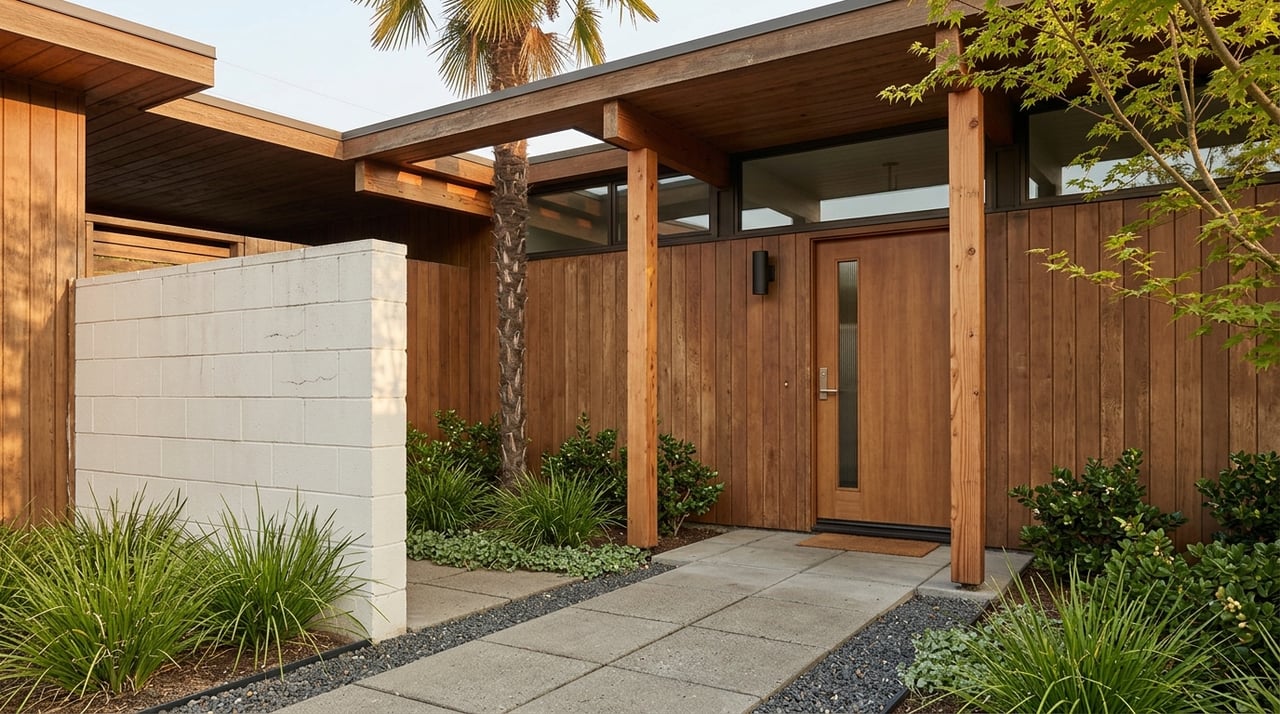
When many buyers picture a mid-century home, they are often thinking of Eichler-style design. Historic documentation from the National Park Service and the City of San José describes these homes as one-story, horizontally oriented, post-and-beam houses built on slab foundations. They typically feature shallow flat or low-pitch roofs, deep eaves, large expanses of glass, and floor plans organized around an atrium, courtyard, or patio.
Inside, the appeal is usually openness and light. Mid-century layouts often have rectangular, L-shaped, or U-shaped plans that connect living spaces to the rear yard. You may also see minimal street-facing windows, which can create a private feel from the front while opening dramatically toward outdoor spaces in back.
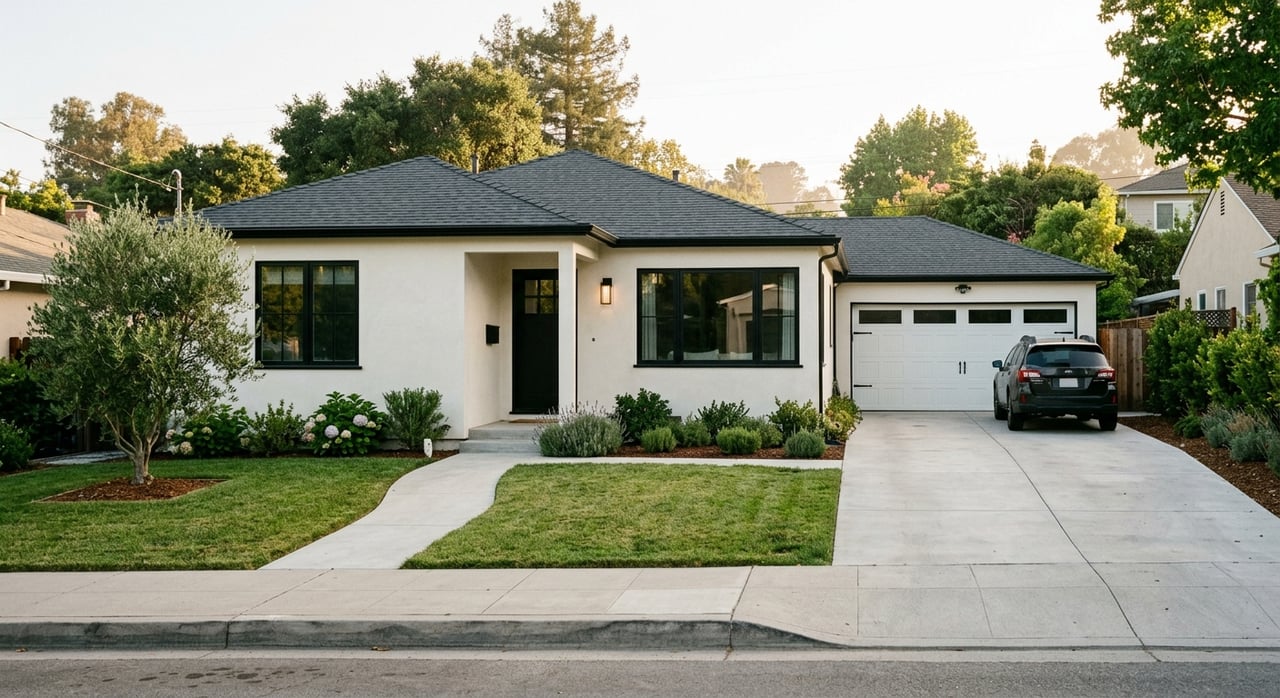
Sunnybrae buyers should know that the neighborhood does not read like one single tract of identical homes. Local listings show a mix of authentic Eichler-style homes, remodeled mid-century properties, Eichler-inspired updates, and more conventional expanded layouts. That variety is part of the neighborhood’s charm, but it also means you need to judge each property on its own merits.
Mid-century features to watch for
If you are touring Sunnybrae homes, keep an eye out for features like these:
- Post-and-beam construction
- Slab foundation design
- Low-pitch or shallow rooflines
- Deep roof overhangs
- Vaulted exposed beams
- Skylights
- Floor-to-ceiling glass
- Courtyard or atrium-centered layouts
- Strong indoor-outdoor flow
Nearby listings in the broader Sunnybrae Park and 19th Avenue Park area have included homes described as Eichler or Eichler-style, with features such as vaulted beams, skylights, picture-frame windows, floor-to-ceiling courtyard glass, and 1950s-era construction. Those examples help confirm that buyers can still find this design language in the local market.
Expect Layout Variety in Sunnybrae
One of the biggest buying mistakes in a neighborhood like Sunnybrae is assuming that architecture alone determines value. Recent inventory shows a wide spread, from compact 2-bedroom homes around 1,000 square feet to 3-bedroom homes around 1,300 to 1,700 square feet, plus larger homes near 1,800 square feet on Sunnybrae Boulevard. That means your day-to-day livability may vary just as much as the exterior style.
As you compare homes, focus on how the floor plan fits your needs. A beautifully preserved mid-century home may still feel tight if storage, bedroom count, or flow do not work for you. On the other hand, a more updated or expanded property may offer a better long-term fit even if it is less architecturally pure.
Inspection Priorities for Mid-Century Homes
Mid-century homes can be wonderful to live in, but they reward careful due diligence. The same features that make them visually striking can also create inspection issues that deserve a closer look. In Sunnybrae, this matters even more because buyers are often paying a premium for design and location.
Roof, skylights, and glass
Shallow roofs and large expanses of glass are part of the classic look, but they also make the building envelope especially important. Ask about roof age, flashing details, skylight condition, and whether windows or sliders have seal issues. Water intrusion and deferred maintenance can be expensive, so this is not an area to treat lightly.
Foundation and seismic retrofit
Many Eichler-style homes were built on slab foundations with post-and-beam framing. In California, you should ask whether the home has had a seismic retrofit, whether the work was permitted, and whether records are available. Cal OES and CRMP describe brace-and-bolt retrofits as bolting the house to the foundation and adding perimeter bracing.
Mechanical systems
Radiant heat was a common original feature in Eichler-style homes. You may also encounter older electrical service, plumbing components, HVAC updates, or aging water heaters. Since San Mateo requires permits for electrical, mechanical, and plumbing work, it is smart to compare inspection findings with the home’s permit history.
Lead and asbestos concerns
Many mid-century homes were built before 1978, which means lead-based paint may be present. The EPA also notes that some older materials, such as floor tile or pipe wrap, may contain asbestos and should be sampled by a trained professional before renovation disturbs them. If you plan to remodel, this is an important part of your budgeting and planning.
Sewer lateral requirements
San Mateo’s private sewer lateral ordinance requires an inspection when a property is sold or when permitted additions, alterations, or remodels reach at least $90,000 in valuation. For buyers, sewer history should be part of the normal due diligence checklist. If future work touches the public right-of-way, an encroachment permit is also required.
Renovation Rules Matter in San Mateo
If you are buying a mid-century home with plans to improve it, do not assume that a simple vision board will translate into a simple remodel. San Mateo requires building permits to build, enlarge, alter, remove, demolish, or repair a structure. Separate electrical, mechanical, and plumbing permits are also required for common system work.
Some projects may trigger planning review before formal submittal. According to the city’s planning guide, examples can include new two-story homes, second-story additions, certain wall extensions, fence exceptions, circular driveways, and work involving historic resources or historic districts. If your future plans are a major reason you want the property, it makes sense to verify feasibility early.
Reach codes can affect your remodel
San Mateo’s reach codes may shape the cost and scope of home improvements. The city says these rules apply to certain residential renovation projects, including electrical panel upgrades, kitchen and laundry remodels, air-conditioning projects, grill or fire-pit work, pools, and additions or alterations that include water-heater replacement. In some cases, electric-readiness and electric appliances may be required, and a qualifying water-heater replacement must use a heat-pump water heater.
Thinking about an ADU?
San Mateo offers pre-approved ADU plans, which can make the process more approachable. Still, the city requires site-specific review and a final building permit. In other words, an ADU may be possible, but it is never automatic just because a property has a backyard.
How Sunnybrae Buyers Should Think About Value
In Sunnybrae, value is shaped by more than architecture. Recent sales show meaningful price differences based on condition, square footage, layout, and updates. Redfin reported examples including a 2-bedroom, 1-bath home at 1,050 square feet that sold for $1,445,000, a 2-bedroom, 2-bath home at 2,097 square feet that sold for $1,543,000, and a 3-bedroom, 3-bath home at 1,720 square feet that sold for $2,335,000.
That spread tells you something important. Buyers are not simply paying for a mid-century label. They are paying for how well the home functions, how updated the systems are, and how confidently they can move in without taking on surprise projects.
Sunnybrae also trades above citywide norms on a price-per-square-foot basis. Redfin reported Sunnybrae at $1.28K per square foot versus $1.17K citywide in San Mateo. That premium can make sense for the right property, but it also raises the stakes on inspections, disclosures, and renovation math.
A Smart Buying Strategy for Sunnybrae
If you want to buy a mid-century home in Sunnybrae, speed matters, but clarity matters more. Well-priced homes can move quickly, especially in a neighborhood where buyers are willing to compete for design character and location. At the same time, paying above list only makes sense when you understand the home’s condition, permit history, and likely upgrade costs.
A practical approach usually looks like this:
- Study recent Sunnybrae sales, not just broader San Mateo comps
- Separate original charm from true functional value
- Review roof, glazing, foundation, and systems closely
- Ask for permit records tied to major updates
- Understand sewer lateral requirements before closing
- Check city feasibility early if you plan to remodel or add an ADU
When you buy with that level of preparation, you are in a much better position to decide whether a specific Sunnybrae home is worth the premium.
Buying a mid-century home here is often about balancing emotion with good process. You want the light, lines, and character that drew you in, but you also want confidence in what sits behind the walls, under the roof, and in the permit file. With the right local guidance, you can compete intelligently and choose a home that fits both your style and your long-term plans.
If you are exploring Sunnybrae or comparing mid-century homes across San Mateo, Luis Vasquez can help you evaluate neighborhood value, property condition, and next-step strategy with local, high-touch guidance.
FAQs
What is Sunnybrae in San Mateo known for?
- Sunnybrae is a defined San Mateo neighborhood with a competitive housing market, varied home styles, and some locally available mid-century and Eichler-style properties.
What should you inspect in a Sunnybrae mid-century home?
- Focus on the roof, flashing, skylights, window and slider seals, slab foundation, seismic retrofit history, mechanical systems, permit records, and sewer lateral history.
Are all Sunnybrae homes true Eichlers?
- No. Sunnybrae includes a mix of authentic Eichler-style homes, Eichler-inspired remodels, and more conventional expanded layouts.
Do San Mateo remodels require permits for mid-century homes?
- Yes. San Mateo requires permits for many types of building, electrical, mechanical, and plumbing work, and some projects may also trigger planning review.
Can you add an ADU to a Sunnybrae property?
- Possibly. San Mateo offers pre-approved ADU plans, but each project still needs site-specific review and a final building permit.
Is Sunnybrae more expensive than the broader San Mateo market?
- Based on the research report, yes. Sunnybrae’s recent median sale price and price per square foot have run above citywide San Mateo figures.